
“I know he wants something… I just don’t know what.” If you have ever found yourself saying those words, you are not alone.
Parents often describe the same scene in different ways. Their child is crying, pulling them towards another room, pushing things away, or becoming upset over what seems like a small problem. They know their child is trying to communicate, but they can’t quite understand the message.
It can be heartbreaking. Not because your child doesn’t have something to say, but because both of you are working so hard to understand each other.
This is one of the biggest reasons families look into ABA therapy communication skills programs. They aren’t searching for perfect speech overnight but something much simpler.
“I just want my child to tell me what they need.” And that goal is where ABA therapy begins.
Communication Isn’t Just About Words
One of the biggest misconceptions about autism is that communication only means talking. In reality, communication starts much earlier than speech. A toddler reaches for a cookie. A little girl takes her father’s hand and leads him to the garden because she wants to play.
A child smiles when bubbles appear. Another covers his ears because the room is too loud.
They are all communicating, but the challenge is that many children with autism don’t yet have a reliable way to express themselves every time they need something. When people don’t understand them, frustration naturally follows.
That’s why therapists at ABA for speech development don’t walk into a session asking, “How can I teach this child to speak?” Instead, they ask, “How is this child already communicating, and how can we build from there?”
Before Conversations Come the Small Wins
Parents sometimes imagine that enhancing communication skills for autism therapy begins with flashcards, worksheets, or repeating words over and over, but usually, they don’t. Think of a therapist sitting on the floor with a child whose favorite toy is a spinning car.
The therapist doesn’t immediately hand it over; they wait. The child reaches, and the therapist smiles and waits another second. In the next step, the child might point toward the toy or make a sound that only their parents would recognize.
Whatever that communication looks like, the therapist responds immediately.
The child gets the car. Something important has just happened.
The child has learned that communication changes what happens around them. That lesson is far more valuable than memorising ten random words. It’s the foundation on which every future conversation is built.
When Communication Replaces Frustration
Parents often tell therapists about child behaviors they find difficult to manage. Their child throws toys, they scream when dinner isn’t ready, and they hit their sibling or melt down during transitions.
Those behaviors can feel overwhelming, but experienced ABA professionals at Willow Reach rarely stop at the behavior itself. Instead, they ask another question.
“What is the child trying to say?” Sometimes the answer is surprisingly simple.
“I’m hungry.” “I don’t want this.” “I’m scared.” “I need help.” “I want a break.”
When a child doesn’t have a dependable way (language) to express those thoughts, behavior can become their language.
One little boy refused to leave the playground every evening. His parents thought he was simply being stubborn.
During verbal behavior therapy, parents realized something different. He didn’t know how to ask for “five more minutes.”
Once he learned that phrase, the daily battles became much shorter because he finally had a way to express what he wanted.
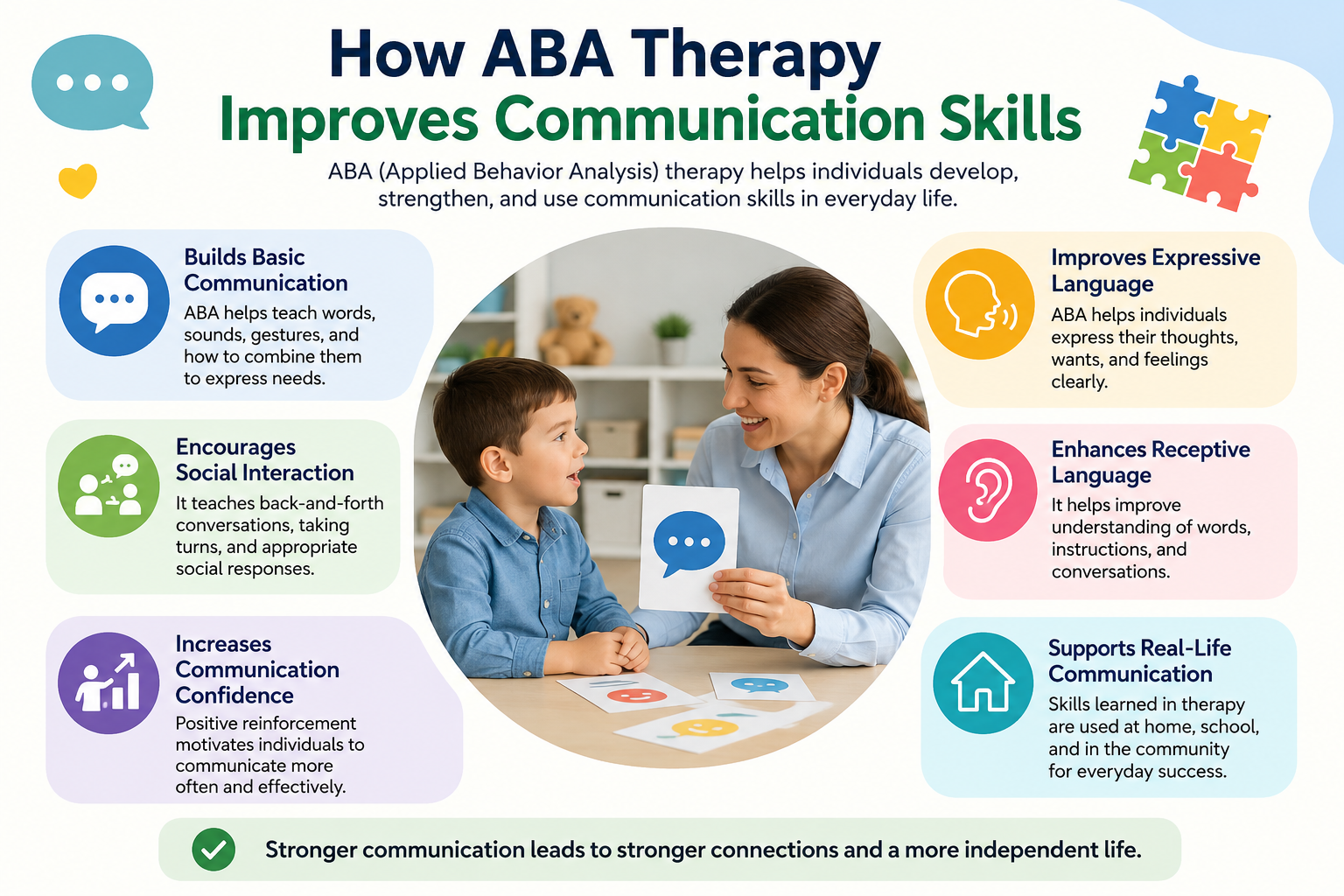
That’s one of the reasons ABA therapy for autism often focuses on functional communication before anything else. Children first learn communication that improves everyday life.
The longer conversations can come later.
What Actually Happens During an ABA Session?
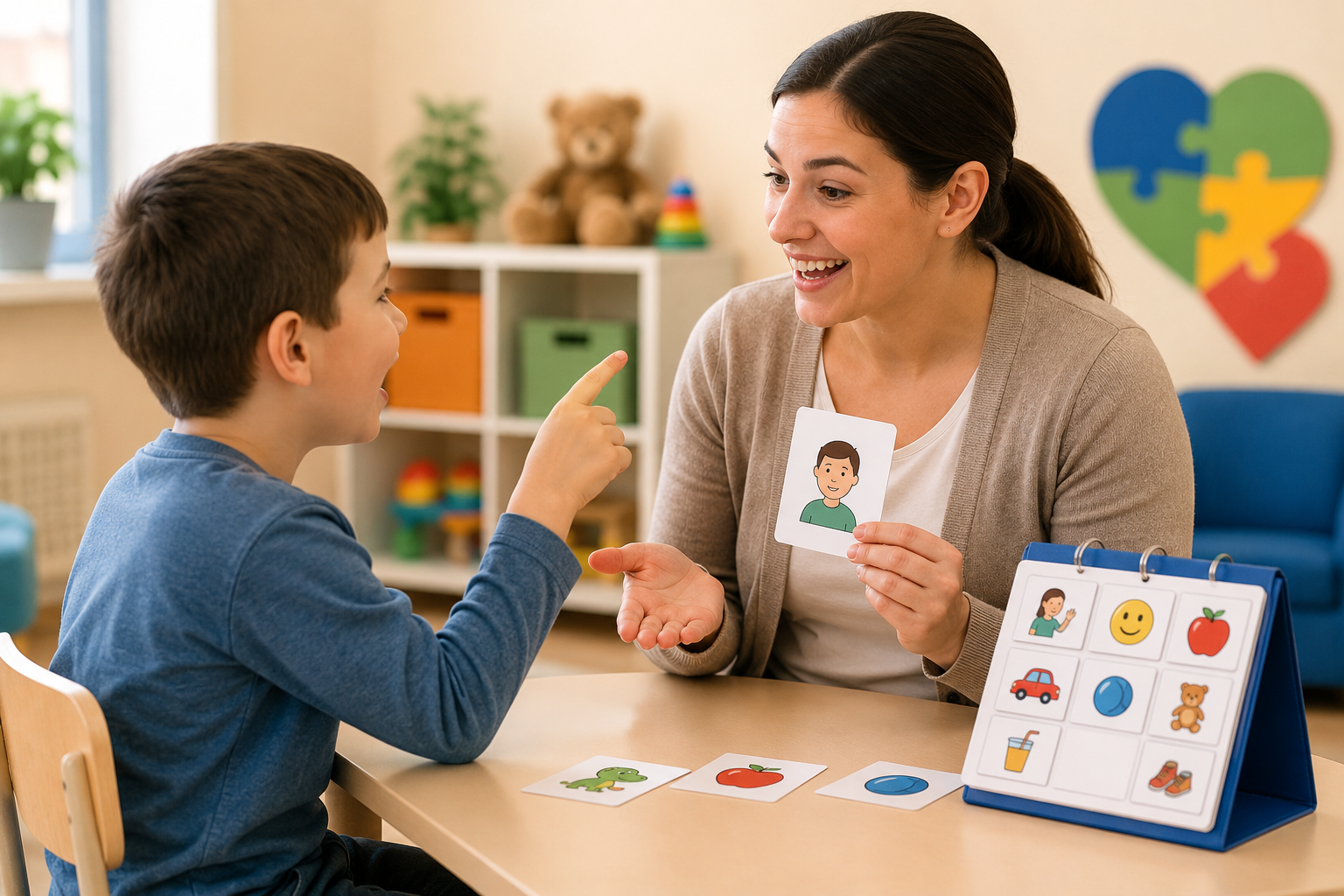
Many people imagine a therapist sitting across a table with flashcards, asking a child to repeat words again and again. While structured teaching has its place, communication sessions usually look far more natural than people expect.
You might walk into the room and see a therapist building a train track, blowing bubbles, reading The Very Hungry Caterpillar for what feels like the hundredth time, or pretending to run a grocery store with toy food.
It doesn’t look like a language lesson, and that’s intentional.
Children enrolled in ABA therapy for autism learn best when they are interested. If a child loves dinosaurs, the therapist talks about them. If they are fascinated by cars, then cars become part of the lesson. The child’s interests aren’t distractions; they are opportunities.
Imagine a little girl who loves bubbles. The therapist holds the bubble bottle but doesn’t open it straight away. The girl waits for sometime and then reaches for it.
Instead of guessing what the child wants, the therapist encourages one small nonverbal communication for the autistic kid to attempt. It might be pointing. It might be signing “more.” It might simply be looking towards the therapist. The moment that happens, the bubbles appear. Within seconds, the child learns something important.
“When I communicate, people understand me.”
Those tiny moments happen dozens of times during a session. Individually they seem small. Together, they begin changing how a child interacts with the world.
The Small Wins Parents Never Forget
Ask any experienced ABA therapy communication skills expert about their favorite success story, and you will rarely hear them mention a child reciting the alphabet. Instead, they talk about moments that most people would overlook.
A little boy who looked at his mom and said, “Up,” instead of crying to be picked up.
A child who independently asked for a glass of water for the first time. A teenager who ordered their own meal at a restaurant.
A little girl who told her teacher, “I’m scared,” instead of running out of the classroom.
Those moments change family life.
Parents often say the house feels calmer because everyone understands each other a little better. Siblings argue less, bedtime becomes easier, and trips to the supermarket become possible again.
Communication doesn’t solve every challenge, but it often makes everyday life feel less overwhelming.
What Can Parents Do Between Therapy Sessions?
One of the biggest myths is that communication only develops during therapy.
In reality, some of the best learning happens in ordinary moments such as making breakfast, while getting dressed, while watering plants, or while grocery shopping.
Children don’t need parents to become ABA for speech development therapists. They simply need opportunities to communicate.
So, instead of immediately handing over a favorite toy, pause for a moment. Give your child the chance to ask. If they point, acknowledge it; if they attempt a word, celebrate it.
If they use a picture card or a device, respond with the same enthusiasm.
Every successful interaction reinforces the same message.
“People understand me when I communicate.” Consistency matters far more than perfection. Some days will feel incredibly successful. Other days may feel like you have gone backwards.
Progress in communication is rarely a straight line. It’s usually a series of small steps, unexpected breakthroughs, and occasional setbacks. Experienced therapists expect that, and parents shouldn’t be discouraged by it either.
A Partnership Built Around Your Child
Final Thoughts
No therapist spends more time with a child than their family. That’s why effective ABA programs don’t simply work with children; they work with parents too.
Therapists share strategies, celebrate progress, answer questions, and adjust goals as children grow. Communication isn’t something that belongs only inside a therapy clinic. It becomes part of family life.
At Willow Reach ABA, we believe every child deserves the opportunity to express their needs, share their personality, and build meaningful relationships. Whether children communicate through spoken words, gestures, pictures, or technology, we celebrate every step they take.
Because in the end, the goal of autism communication support isn’t simply helping a child talk. It’s helping them be heard.
Frequently Asked Questions
- Can ABA therapy help a child who doesn’t speak?
Answer: Yes, ABA therapy for autism supports all forms of communication, not just spoken language. If a child isn’t ready to use words, therapists may encourage gestures or sign language.
- At what age should my child start ABA therapy for communication?
Answer: Children can benefit from ABA therapy at all ages, but early intervention is important to build communication during the years when language is developing rapidly.
- Does ABA therapy only focus on speech?
Answer: ABA therapy focuses on functional communication, which also includes asking for help, expressing wants and needs, and following directions.
- Can parents help improve communication skills at home?
Answer: Yes, encouraging your child to request a favorite toy, offering simple choices, reading together, and giving them time to respond reinforce the communication skills they practice during ABA sessions.
- How long does it take to see progress in communication?
Answer: As per the professionals at Willow Reach, every child’s journey is different. Some children begin using new ways to communicate within a few weeks, while others need more time. Progress depends on consistency and opportunities to practice both during sessions and at home.