


The children with Autism Spectrum Disorder (ASD) usually encounter difficulties that are not necessarily related to communication and socialization. Other challenging behaviors that are experienced by many families in autism include tantrums, aggression, self-injury, noncompliance, or transition difficulties. When such behavioral issues among children become overwhelming to their parents and caregivers, it is particularly troubling when it interferes with their learning, relationship, and daily lives.
At Willow Reach Behavior Services, we know that the challenging behaviors are not the defiance of a child, but most of the time, they are the means of child expressing the needs, frustration or sensual pain that are not achieved. It is in this regard that ABA therapy of autism comes in. Applied Behavior Analysis (ABA therapy) is a scientifically proven, personalized strategy aimed at enabling children to acquire meaningful skills and minimizing behaviors that restrain their development and behavioral autonomy.
Instead of punishment, positive behavior support ABA is aimed at studying the cause behind a behavior and educating safer and more effective options. The early applied ABA therapy in the form of early intervention can aid in the significant improvement of emotional regulation and communication as well as the adaptive skills. This article will discuss how ABA therapy of challenging behaviors works, and why it is among the most effective and efficient methods of supporting children with ASD.
 Understanding Challenging Behaviors in Children with Autism
Challenging behaviors refer to actions that interfere with a child’s ability to learn, socialize, or function safely in everyday environments. In children with autism, these behaviors may include frequent meltdowns, aggression toward others, self-injurious behaviors, property destruction, or refusal to follow instructions. While these behaviors can be difficult to manage, it’s important to recognize that they serve a purpose for the child.
Many challenging behaviors in autism stem from communication difficulties. When a child cannot effectively express their wants, needs, or emotions, behavior often becomes their primary form of communication. Sensory sensitivities, changes in routine, anxiety, or difficulty understanding expectations can also trigger behavior challenges.
Unlike typical misbehavior, these actions are not intentional attempts to cause disruption. Instead, they reflect skill deficits or unmet needs. Understanding this distinction is essential when addressing behavior problems in children with ASD. ABA therapy focuses on identifying these underlying causes and creating supportive strategies that help children succeed across home, school, and community settings.
Why Do Challenging Behaviors Happen?
In most cases, no. Challenging behaviors are not deliberate acts of defiance. They are often a form of communication. A child may engage in a behavior to gain attention, escape a difficult task, access a preferred item, or cope with sensory overload. ABA therapy for challenging behaviors works to identify these motivations and replace them with appropriate skills.
Can environmental factors trigger behavior problems?
Yes. Loud noises, bright lights, crowded spaces, transitions, or unexpected changes can be overwhelming for children with autism. Without coping strategies, these situations may lead to emotional outbursts or avoidance behaviors. Autism therapy for behavior, such as ABA, helps children learn how to navigate these challenges more effectively.
Do all children with autism display challenging behaviors?
Not all children with ASD experience significant behavior challenges, and the severity varies widely. Autism exists on a spectrum, and each child’s needs are unique. This is why individualized ABA treatment for behavior is so important.
What Is ABA Therapy and How Does It Work?
Applied Behavior Analysis, commonly known as ABA therapy, is a scientifically validated approach used to improve socially significant behaviors. It is widely recognized as one of the most effective therapies for children with autism, particularly when addressing behavior challenges.
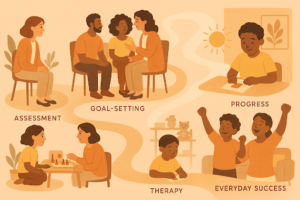
ABA therapy begins with a comprehensive assessment conducted by a Board Certified Behavior Analyst (BCBA). This assessment evaluates the child’s strengths, challenges, learning style, and specific behaviors of concern. Based on this data, an individualized treatment plan is developed to target both skill development and behavior reduction.
ABA therapy for autism is data-driven, meaning progress is continuously monitored and strategies are adjusted as the child grows. Therapy sessions may take place at home, in school, or in community settings, allowing skills to generalize across environments. At Willow Reach Behavior Services, ABA therapy is delivered with compassion, collaboration, and a strong focus on helping children reach their fullest potential.

How ABA Therapy Reduces Challenging Behaviors
Identifying the Function of Behavior
One of the most important components of ABA therapy for challenging behaviors is understanding why a behavior occurs. Through a process called a Functional Behavior Assessment (FBA), therapists analyze what happens before and after a behavior. This helps determine whether the behavior is maintained by attention, escape, sensory input, or access to tangible items.
Teaching Replacement Behaviors
Once the function is identified, ABA behavior strategies focus on teaching appropriate replacement behaviors that serve the same purpose. For example, a child who tantrums to avoid a task may learn to request a break using words, signs, or visual supports. This empowers the child to communicate effectively without engaging in unsafe or disruptive behaviors.
Reinforcing Positive Behaviors
Positive reinforcement is a cornerstone of ABA therapy. Desired behaviors are consistently acknowledged and rewarded based on what motivates the child. Over time, this reinforcement strengthens positive behaviors while reducing reliance on challenging ones. This approach aligns with positive behavior support ABA, helping children build lasting skills that improve independence and quality of life.
Does ABA therapy focus only on reducing challenging behaviors?
No. While reducing unsafe or disruptive behaviors is an important goal, ABA therapy places a strong emphasis on teaching functional life skills. Children learn communication, social interaction, emotional regulation, and adaptive behaviors that improve overall quality of life. The goal is not simply to stop behaviors, but to replace them with meaningful, appropriate alternatives.
How does ABA therapy encourage positive behavior?
Positive behavior support ABA relies on reinforcement rather than punishment. When children demonstrate desired behaviors, such as asking for help, following instructions, or coping with frustration – they receive reinforcement tailored to their interests. Over time, this reinforcement increases motivation and builds confidence.
Can ABA therapy help children manage emotions?
Yes. Many behavior problems in children with autism are linked to difficulty regulating emotions. ABA therapy teaches coping strategies such as deep breathing, requesting breaks, or using visual supports. These skills help children manage frustration and anxiety more effectively.
Positive Behavior Support ABA in Action
Positive behavior support ABA focuses on proactive strategies that create supportive environments for children with autism. Instead of reacting after a behavior occurs, ABA therapists work to prevent challenges by teaching skills and modifying environments to meet the child’s needs.
For example, a child who engages in tantrums during transitions may struggle with unexpected changes. Through ABA therapy for challenging behaviors, the child might be taught to use a visual schedule or countdown timer to prepare for transitions. Over time, the child learns to move between activities with less distress.
Another example involves children who use aggression to gain attention. ABA therapy teaches appropriate ways to seek attention, such as tapping a caregiver or using words or pictures. When the child uses these replacement behaviors, they receive immediate positive reinforcement, strengthening the new skill.
Family involvement is also a key component. Parents and caregivers are trained to use consistent ABA behavior strategies at home, ensuring that progress continues outside therapy sessions. This consistency helps children generalize skills across environments and maintain long-term success.
The Importance of Early Intervention ABA
Research consistently shows that early intervention ABA leads to better outcomes for children with autism. The early years of development are critical for learning communication, social, and behavioral skills. When ABA therapy for autism begins at a young age, children are more likely to develop effective ways to express themselves and cope with challenges.
Early intervention helps prevent challenging behaviors from becoming deeply ingrained habits. Instead, children learn adaptive skills that support independence and success in school and social settings. Even small improvements early on can have a significant long-term impact.
At Willow Reach Behavior Services, early intervention programs are designed to support both the child and their family. Therapists work closely with caregivers to build routines, reinforce positive behaviors, and create an environment where the child can thrive.
How Long Does ABA Therapy Take to Show Results?
Some children show progress within a few weeks, especially when therapy targets specific behaviors. For others, progress may be gradual. ABA treatment for behavior focuses on steady, measurable improvement rather than quick fixes.
Is progress the same for every child?
No. Every child responds differently to therapy based on their strengths, needs, and level of support. ABA therapy is individualized, meaning goals and strategies are adjusted as the child develops.
Can ABA therapy plans change over time?
Yes. ABA therapy is data-driven. Therapists regularly review progress and modify strategies to ensure continued growth and success.
Is ABA therapy safe for children with autism?
Yes. ABA therapy is evidence-based and focuses on positive reinforcement, skill-building, and emotional well-being.
Can ABA therapy be provided at home or school?
Yes. Autism therapy for behavior can be delivered in various settings to promote real-life skill application.
Does ABA therapy work for severe challenging behaviors?
ABA therapy is effective for a wide range of behaviors, including severe or persistent challenges, when delivered consistently and ethically.
How are parents involved in ABA therapy?
Parents receive training and support to reinforce skills and behaviors at home, creating consistency across environments.
What makes Willow Reach Behavior Services unique?
Willow Reach Behavior Services provides compassionate, individualized ABA therapy focused on empowering children and supporting families every step of the way.
Conclusion:
Challenging behaviors in children with autism are often expressions of unmet needs, not intentional misbehavior. Through ABA therapy for challenging behaviors, children learn effective ways to communicate, cope, and engage with the world around them. By emphasizing positive behavior support ABA, skill development, and early intervention, ABA therapy helps children build a foundation for long-term success.
With the right support, guidance, and evidence-based strategies, families can see meaningful improvements in behavior and daily functioning. Willow Reach Behavior Services is committed to providing compassionate ABA therapy for autism, helping children and families move forward with confidence and hope.