

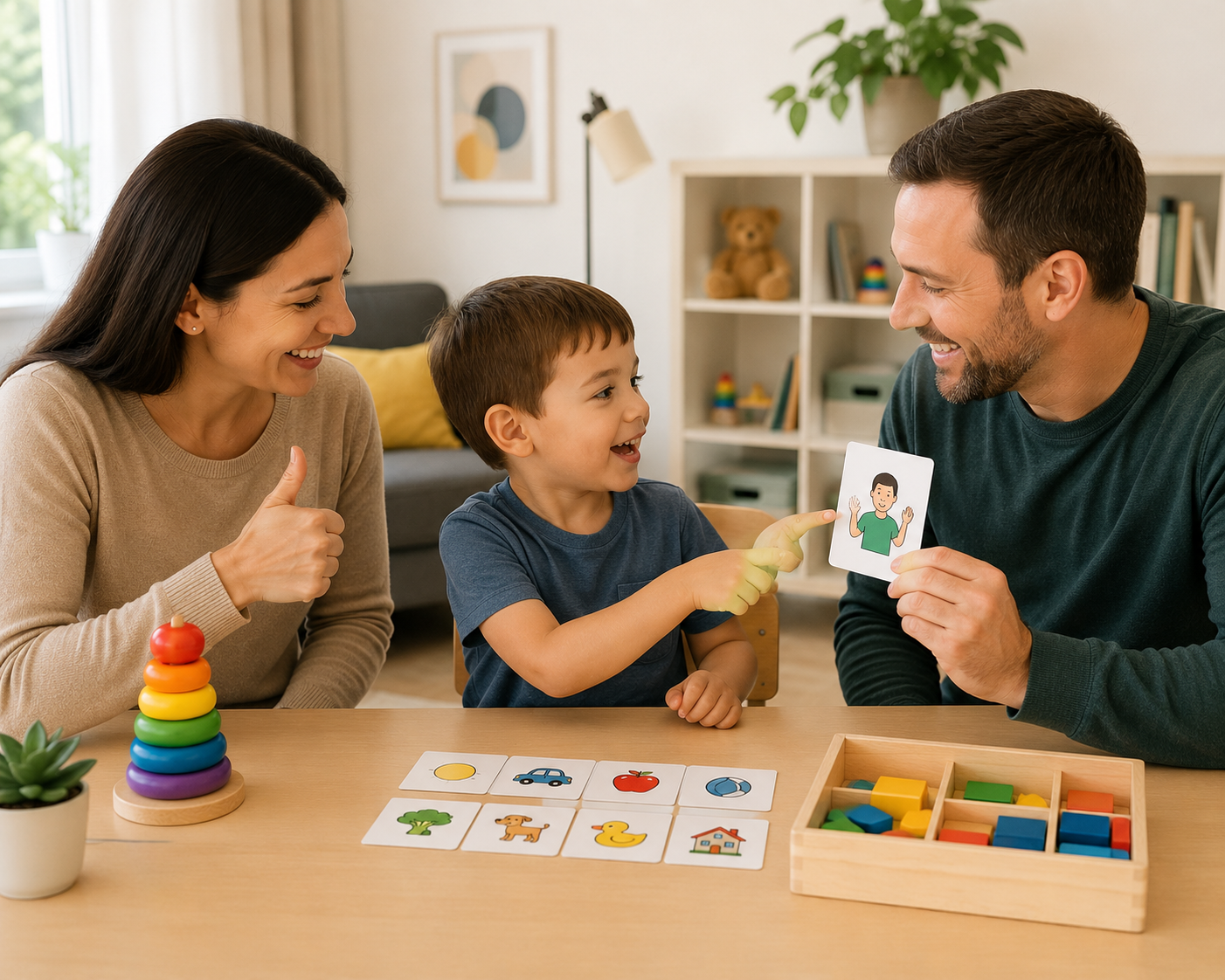
The first time your child uses a new skill at home, it can feel like a tiny miracle.
Maybe it’s as simple as asking for water instead of pointing to the fridge. They might put their shoes away without being told or get through bedtime with fewer tears. To someone else, those moments might seem ordinary. To you, they feel huge because you know how much effort went into getting there.
Then, just when you think you have turned a corner, the same skill disappears the next day.
One of the most significant misconceptions about ABA therapy at home is that progress should be steady. Parents sometimes expect today’s success to automatically become tomorrow’s habit. Children learning new communication or behavioral skills often need opportunities to practice in different places, with different people, and during different routines before those skills become part of their everyday life.
That’s where home becomes one of the most important places for learning.
It is because home is where children spend the majority of their lives. It is the place where they request breakfast, engage in sibling disputes, construct blanket forts, misplace their favorite toy, and negotiate for “just five more minutes” before bedtime.
Learning how to support ABA at home is about looking at the routines you already have and seeing them a little differently.
What Happens Between Therapy Sessions?
Ask almost any parent whose child receives ABA services, and they will tell you the same thing. The questions don’t usually come up during therapy. Therapy is most effective when all parties involved grasp the broader context.
A child doesn’t learn communication only while sitting at a therapy table. They learn it while deciding between apple slices and crackers, while asking for another push on the swing, or while telling dad they don’t want peas with dinner.
Skills become stronger when they are useful.
Children repeat behaviors that help them get what they need or make their lives easier. That’s why practicing outside of scheduled sessions is so important. It provides those new skills a purpose.
Autism Parenting Tips
There’s something many parents admit only after they have built trust with their therapy team.
They are afraid of doing things wrong as they worry they will accidentally undo something the therapist has been working on. They second-guess whether they responded correctly to a tantrum. They replay conversations in their head after bedtime, wondering if they missed an opportunity to teach a skill.
Those thoughts are understandable, but they are also exhausting. Here’s something worth remembering: your child doesn’t need a perfect parent using textbook ABA techniques from sunrise to sunset. They need you.
The parent who knows which pajamas they will actually wear. The parent who can tell the difference between a tired cry and a frustrated one. The parent who notices that something feels “off” long before anyone else does.
No therapist in the world has that kind of insight.
That’s why parent training ABA isn’t designed to turn mothers and fathers into clinicians. It’s designed to help them feel less overwhelmed by the situations they are already facing.
The therapists are actually helping families solve real problems.
The Little Moments Most People Overlook
Parents sometimes imagine learning happens during big teaching moments. But that is not so; they wake up, choose clothes, brush their teeth, eat breakfast, and walk to the car. All these activities include many opportunities to communicate.
Most effective ABA home strategies are almost invisible. For instance, waiting a few extra seconds before assisting with zipping a jacket. Allowing your child to request more cereal instead of automatically refilling the bowl is another effective strategy.
Giving them two choices instead of deciding for them is another effective strategy.
Over weeks and months, those tiny moments begin to change routines that once felt exhausting.
A Routine Doesn’t Have to Be Perfect to Be Helpful
Children don’t benefit from rigid schedules nearly as much as they benefit from familiarity. They like knowing what usually comes next. Maybe breakfast is followed by getting dressed. Maybe story time always comes before bed. Those small patterns become reassuring because they remove a little uncertainty from the day.
If your routine occasionally falls apart (and it will), it doesn’t mean you have failed. You simply pick it up again tomorrow.
Why Is Positive Reinforcement At Home Important?
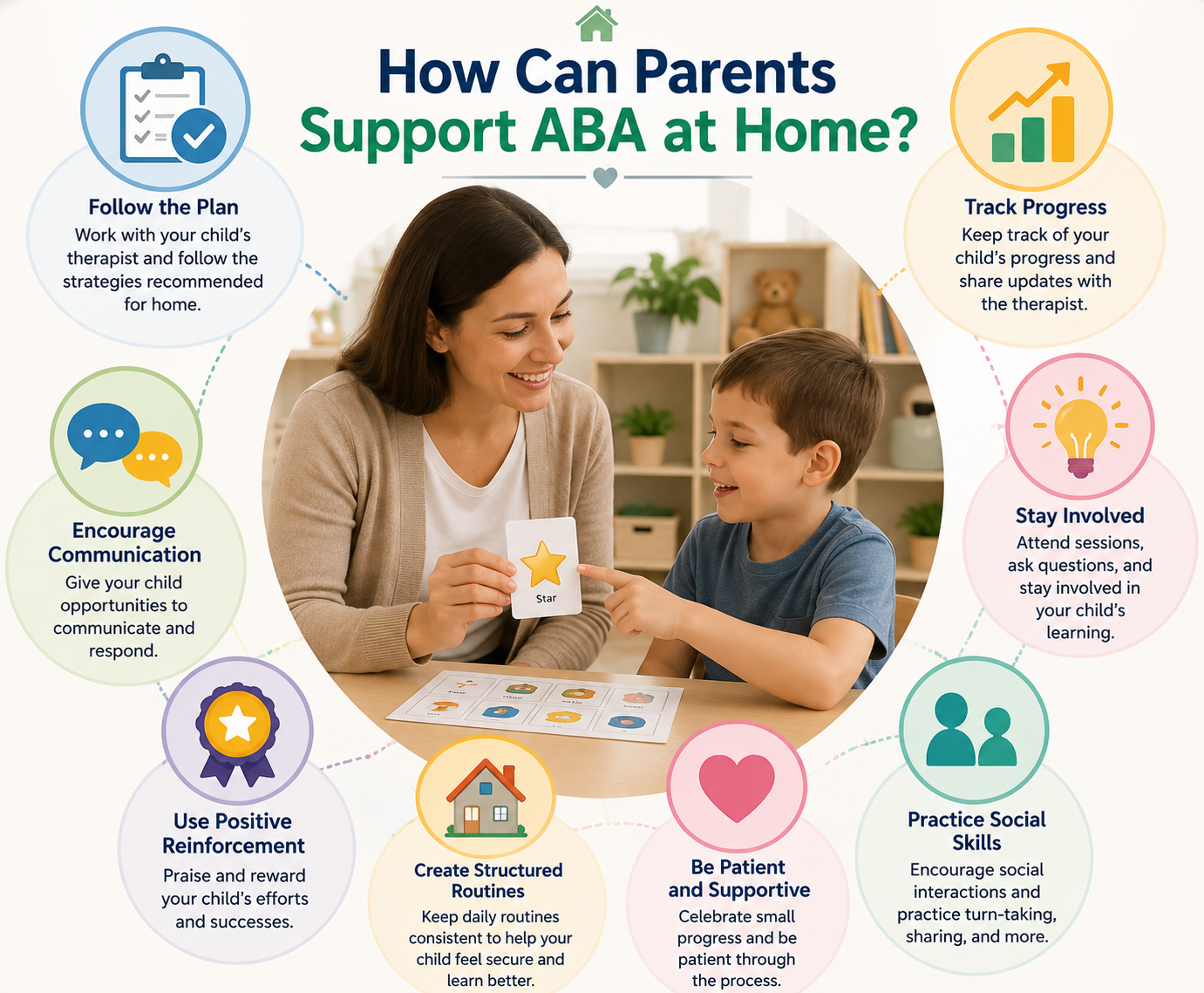
Positive reinforcement at home is important because when children hear, “I noticed you put your plate in the sink without me asking,” they are learning that their effort matters. Notice the difference between that and a quick “Good job.”
One tells the child exactly what they did well. The other is so general that it could mean almost anything.
That doesn’t mean every success deserves a prize. A child’s encouragement can sometimes be as simple as a smile, a hug, or five extra minutes of playtime together. The reward isn’t always the point. Feeling successful often becomes the reward.
Parents may have days when the child refuses to use words they have been using for weeks. These are the days when every transition becomes a struggle. The days when you are convinced all the progress has somehow disappeared overnight.
Children move forward, pause, revisit old challenges, and then surprise everyone by making another leap forward. Adults aren’t much different, if we are honest. We all have days when we are exhausted, distracted, or simply not at our best.
Try not to judge progress by what happened before lunch on a Tuesday. Instead, think about where your child was six months ago. That’s usually where the real growth becomes visible.
The Best ABA Home Strategies Don’t Feel Like Therapy
The most effective ABA home strategies often blend into everyday life so naturally that children don’t even realize they are practicing new skills.
Communication, following directions, patience, motor skills, and independence are all part of the routine. That’s one reason home is such a valuable learning environment. Real life presents situations that flashcards or worksheets cannot replicate.
Working Together Makes the Most Significant Difference
Finding Support That Includes the Whole Family
Choosing an ABA provider isn’t only about credentials or availability. It’s also about finding a team that recognizes the importance of parents’ involvement.
At Willow Reach, families are encouraged to ask questions, share concerns, and celebrate progress as a team. Individualized coaching and parent training in ABA help caregivers learn practical ways to support ABA at home without feeling as though they have to become therapists themselves.
That collaborative approach gives kids practice with meaningful skills in places where they spend most of their time, whether they are preparing for school, playing with siblings, or winding down for the evening. Families looking for Maryland ABA services often find that this partnership makes day-to-day life feel a little less overwhelming and a lot more manageable.
Final Thoughts
Parents sometimes underestimate how much influence they have. Showing consistency in ABA and being a support at home simply requires staying curious, celebrating the small wins, and remembering that progress is measured over months and not days.
Some days will feel easier than others, and that’s parenting, and that’s learning, too.
Frequently Asked Questions
- How can parents support ABA at home without feeling overwhelmed?
Answer: Start by focusing on routines you already have instead of creating new ones. Regular day-to-day tasks offer an opportunity to increase communication, independence, and social skills.
- Could you please clarify what parent training ABA actually involves?
Answer: Parent training ABA isn’t about turning parents into therapists. It’s about helping caregivers understand why certain behaviors happen and showing them practical ways to encourage positive skills during everyday interactions.
- What are some effective ABA home strategies?
Answer: Simple ABA home strategies include offering choices, waiting a few extra seconds before helping, encouraging your child to request items, using visual routines when needed, and acknowledging positive behaviors as soon as they occur.
- Is positive reinforcement only about giving rewards?
Answer: No, positive reinforcement at home can be as simple as specific praise, extra time doing a favorite activity, or celebrating an achievement together. The goal is to encourage behaviors you would like to see repeated, not to reward every action with treats or toys.
- Why is consistency important in ABA?
Answer: Consistency in ABA helps children understand what to expect across different environments. When parents, therapists, teachers, and other carers respond in similar ways, children are more likely to use their skills confidently at home, at school, and in the community.
- Can ABA therapy at home replace clinic-based therapy?
Answer: Therapists at Willow Research suggest that through ABA therapy at home, they can actually see the real-life routines of the children. Many families benefit from one setting or a combination of both.
- What is the typical timeframe for observing progress?
Answer: Every child develops skills at their own pace. Looking at progress over time, rather than day by day, usually provides a much clearer picture.